

A cabin organizer can make small items easier to find. But a size that looks suitable may not leave enough room when controls are used, vents are adjusted, or the seating position changes. Checks should focus on real use inside the car, rather than the appearance of an empty organizer.
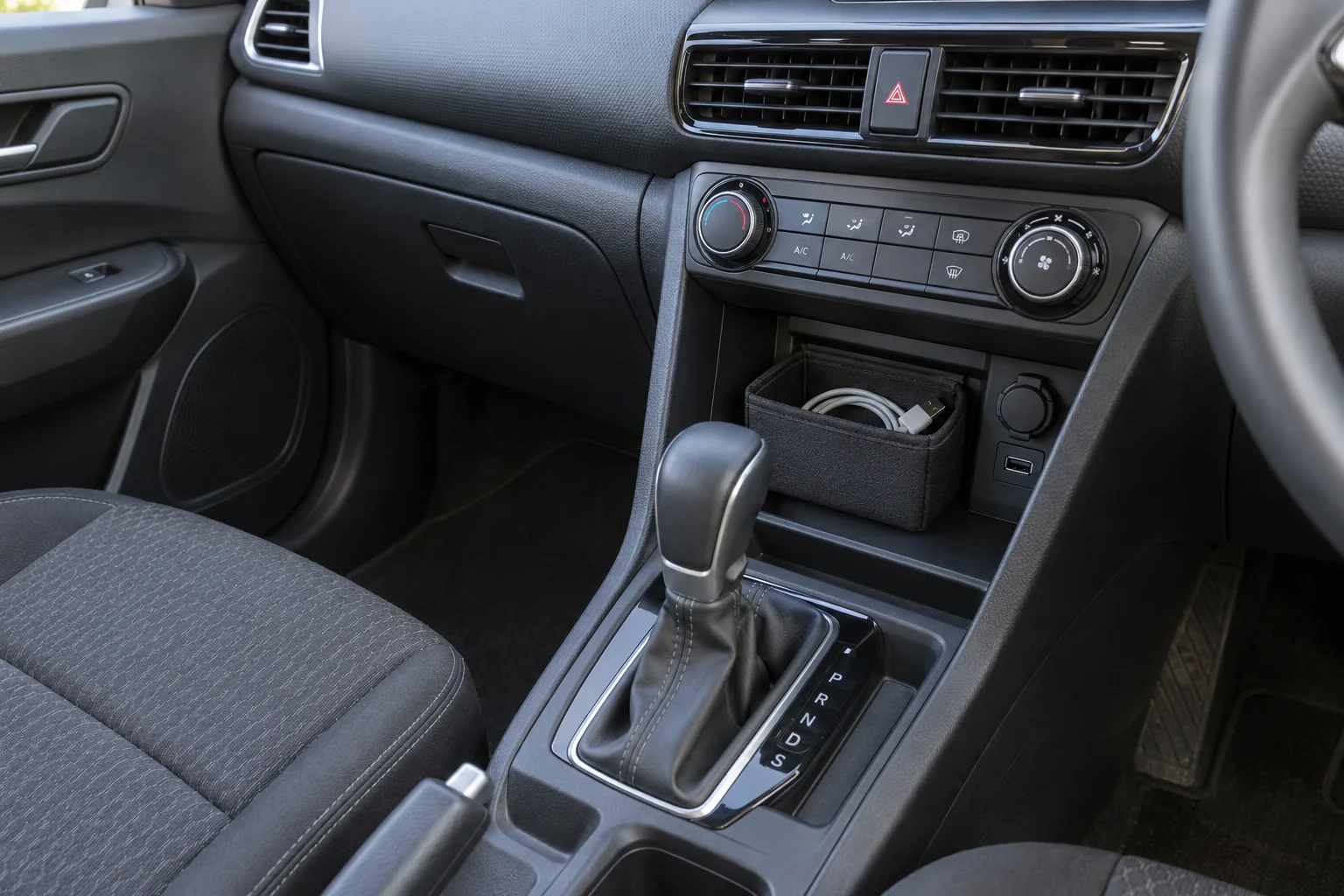
Make observations with the vehicle safely parked. Choose an organizer according to vehicle and accessory instructions, and discuss uncertain locations with someone who understands the vehicle. The following checks help prepare questions about access and placement; observations do not replace determining accessory suitability for a particular model.
Record the need before choosing a location
Start with the items you actually want to store. Note their dimensions, quantity, and when they are used. Storing a parking card differs from storing bottles, cables, or passenger belongings. A clear need makes it easier to decide whether an organizer is necessary and whether a proposed location makes sense.
Check the built-in storage first. An existing compartment may be sufficient after its contents are organised. If an addition is still needed, record why you prefer a particular area. Avoid using a space that must remain clear simply because it is convenient to reach.
Distinguish items accessed while stopped from things that do not need to be reached while driving. Cabin organisation should reduce searching. Decide storage locations and retrieval habits before beginning a journey.
Match the vehicle’s instructions
Airbag locations, sensors, and other components differ between vehicles. Read the manual for your own model and the accessory instructions before installation. Do not assume a location is suitable just because it looks empty or has been used in another car.
For example, the Honda Clarity airbag guide sets boundaries for objects around airbags and the passenger seat. This illustrates why a vehicle-specific reference matters. Apply instructions for your own model rather than copying the arrangement in a photograph.
If placement requires panel removal or involves safety components, stop independent experimentation and seek appropriate assessment. This article prepares simple access checks so an owner can describe their needs clearly.
Check buttons from the usual seated position
Sit in your normal position while the car remains parked. Check whether nearby buttons stay visible and can be reached without moving your hand around the organizer. Confirm that there is enough finger space to press each control accurately.
Check access with the organizer in its intended usage state and according to its instructions. An empty container may appear unobstructive, while its contents cover lettering or extend beyond its edges. Avoid placing heavy or loose items without suitable restraint.
Record any controls whose access changes. A button may remain visible but become difficult to reach, or a compartment lid may no longer open fully. Do not force movements to make the arrangement seem suitable. Access problems are a reason to reconsider the location or organizer type.
Consider vent direction and movement space
Check whether vent slats can move as needed and whether the organizer or its contents obstruct airflow. A position that looks tidy in a photograph may leave insufficient room when the vent direction changes. Placement suitability still follows vehicle and accessory instructions.
Consider nearby levers, compartment doors, and seat movement as well. Each part should work without contacting or trapping added items. Pedal space and vehicle control paths must remain clear; do not experiment with arrangements entering those areas.
For cables, plan the route according to the device and vehicle. Do not leave a cable spanning moving parts without proper routing. Uncertainty about a cable path should be recorded as a question before installation is decided.
Make a short check list
Use the same list for the empty state and intended usage state. This helps compare conditions without relying on memory. Placement photographs can be attached, but descriptions of problems matter more than many similar images.
| Part | Question to record |
|---|---|
| Buttons | Visible and reachable without obstruction? |
| Vents | Required movement and direction still available? |
| Compartments | Able to open and close normally? |
| Stored items | Restrained according to accessory instructions? |
| Restricted areas | Consistent with boundaries in the vehicle manual? |
Do not mark an uncertain answer as passed. Write the question and identify what needs checking. An honest check is more helpful than trying to retain an organizer that does not fit the need.
Discuss requirements before regular use
Bring the item list, vehicle model, and placement photographs to a discussion with Hariman. Explain the controls or spaces you want to preserve and any uncertain areas. Other cabin comfort guides can help organise wider interior requirements.
Once an appropriate party has agreed the placement, develop a habit of returning items to their locations and review the arrangement when the contents change. A useful organizer fits the cabin’s functions, keeps access clear, and does not require the owner to alter control use around added belongings.